Latest Article
February 19th, 2026
Safety in Numbers: How a Sector-Wide Partnership is Rewriting the Rulebook
Other posts by this author
February 19th, 2026
Safety in Numbers: How a Sector-Wide Partnership is Rewriting the Rulebook
February 3rd, 2026
BPA Team Completes IOSH Approved Emergency Response Training
November 10th, 2025
Press Release: SIAS Level 2 Diploma in Bulk Storage Operations
Categories
Competency Health and Safety Articles Health and Safety News Health and Safety Training In-House News Industry News Online Health and safety Process Training Reynolds Training Services rts Training Course Trending Uncategorized
Written by Reynolds Training
February 16th, 2026
Competency
As digitalisation accelerates, energy systems shift and the workforce transforms, John Reynolds of Reynolds Training Services asks: can technology strengthen the culture of competence or risk diluting it?
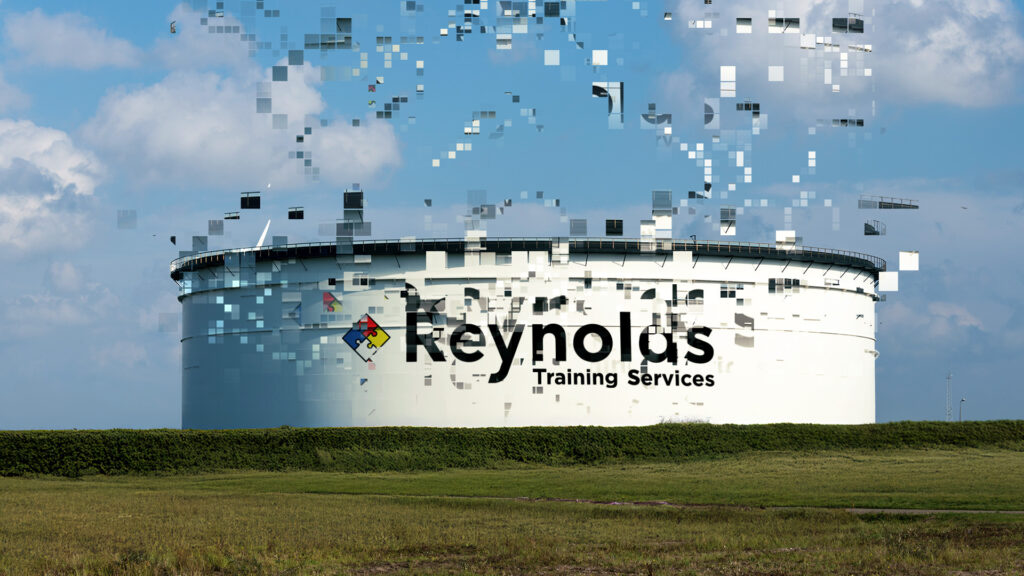
High-hazard industries are being reshaped before our eyes. Digitalisation is rewiring how we operate. The energy transition is pipelining new fuels, new standards and new hazards. And decades of expertise are walking out the door as the workforce changes.
Each of these forces carries risk. At the same time, a new generation is entering our workforce. They are digital natives. Technology is second nature. They were born into it. That makes them quick to embrace new tools, but with very different expectations of how they learn and engage.
Traditional training methods alone won’t hold their attention. Yet digital learning alone won’t build the instincts that protect lives.
This is the crux of the challenge. As industry digitises, will competence keep pace or get left behind? And if technology is part of the answer, how do we make sure it strengthens, rather than dilutes, the culture of safety on which everything depends?
When I joined this industry, you learned with all five senses engaged. You could smell vapour before you saw it. You could hear a pump straining before it broke down. You could feel the temperature of a tank skin as you took a manual reading.
That kind of sensory experience is harder to replicate in a digital world. A screen doesn’t smell or rattle. A dashboard won’t teach you to trust your gut. And when you consider that 80–90% of major accidents involve human error – often linked to training gaps – the danger of losing these instincts becomes clear.
This erosion of embodied competence isn’t happening in a silo. It’s being accelerated by the tectonic shifts of digitalisation, energy transition and workforce change.
In my view, this is where the hazard lies. If we train people only through digital theory, we risk losing the instincts that protect lives and assets.
I love technology. Anything that improves safety and protects plants, processes and people has to be welcomed. But it is a double-edged sword. I recall stumbling across Lisanne Bainbridge’s famous “irony of automation” in the early 1980s, an era when films like The Terminator were feeding the cultural imagination. Bainbridge’s point still resonates today: the more systems take over, the less practice humans have in managing them and, in turn, the harder it becomes when they need to intervene.
Time travel back to 2025, and that irony risks being played out in our own sector. An operator who spends years monitoring screens may never develop the instinctive awareness that once came from walking the plant, feeling the heat off a vessel or hearing the faint rattle of a pump before it failed.
The danger is that technology can quietly mask inexperience, right up until the moment it fails. And at that point, competence becomes the last line of defence. That’s why it must evolve alongside technology, not erode beneath it.
Should we throw technology out? Pretend dashboards, digital twins and VR don’t exist? Ignore the reality that new entrants to our industry have grown up with smartphones in their hands and expect to learn differently? Of course not.
The question isn’t technology or tradition. It’s how we blend the two.
Because here’s the reality: skills are leaving faster than they’re being replaced. In the UK energy and utilities sector alone, over a quarter of the workforce is expected to retire within the next decade, taking decades of knowledge with them. At the same time, regulators are demanding proof of competence in domains that didn’t even exist ten years ago – hydrogen handling, CCUS, digital safety systems. The future isn’t waiting. Neither can we.
Technology, then, is not the enemy. It’s inevitable. And more than that: it’s essential. Used well, it is the key to unlocking safer operations today and preparing the workforce of tomorrow.
But only if we blend it with the embodied, experiential learning that turns theory into instinct. True competence isn’t digital or manual. It’s the integration of knowledge, skills and experience, expressed through the behaviours that keep plants, processes and people safe.
For me, the answer isn’t about choosing between digital or traditional methods – it’s about bringing them together. That’s exactly why we developed Virtual Reynolds: born from these very challenges and designed to put experiential learning back at the heart of competence.
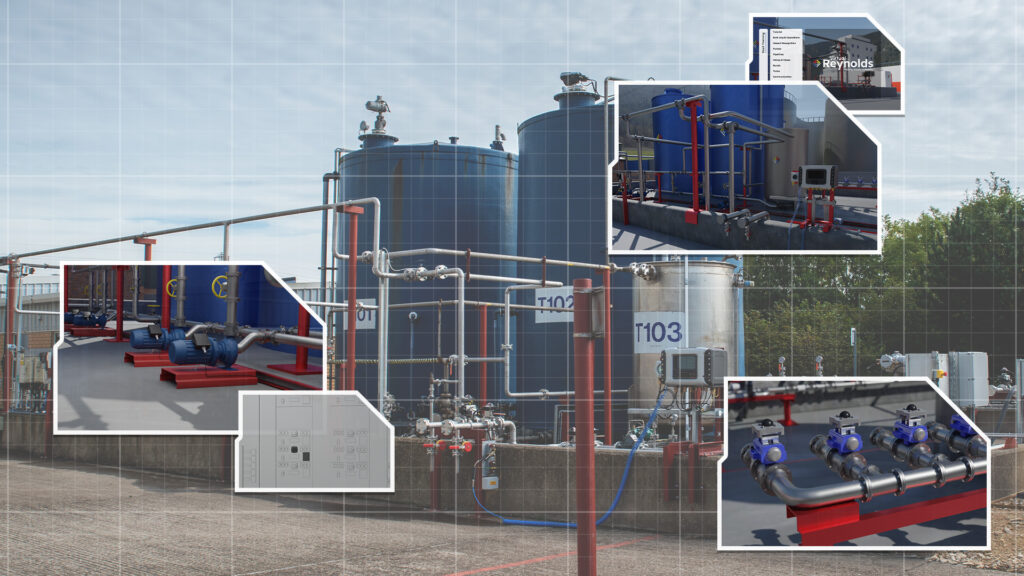
With Virtual Reynolds, learners step into immersive environments that mirror real-world experiences. They can walk through layouts and learn to recognise potential hazards in context – all within a safe, controlled space. Crucially, this complements accredited online learning and forms part of a blended pathway. By the time trainees reach a live training facility, they already have familiarity with the environment, accelerating their progress and reducing risk.
The technological advantages are clear:
Aviation and healthcare have long used VR to prepare professionals before they face pressure in the real world. Our industry shouldn’t lag behind.
Virtual Reynolds proves the point – digital tools can transform how people prepare for high-hazard environments. But let me be clear: no digital platform is the whole answer. Competence must still be proven in reality, observed in the field and tested under pressure. That’s why our VR system, like others, is designed to complement, not replace, physical training and assessment at facilities such as our National Centre for Process Manufacturing.
And VR is just one part of the wider shift. Across industry, organisations are adopting elearning platforms and simulators, for example, to expand training access and consistency. These tools make learning scalable and cost-effective. They provide safe environments to test knowledge and practise rare scenarios. And they allow companies to capture lessons learned and recycle them across their workforce.
The trend is clear: the global VR training market alone is projected to exceed $4.5 billion by 2032. Industry is moving fast to embrace immersive and digital methods.
Regulators, though, have rightly drawn a firm line. Under COMAH and similar frameworks, competence cannot stop at theory. Training may start online, but it must always end in practice – validated and reinforced in the real world.
That’s why I say digital training is an enabler, not a replacement. It accelerates knowledge. It broadens access. It builds familiarity. But true competence is forged when knowledge, skill, experience and behaviour come together in the field – because that’s where safety lives or dies.
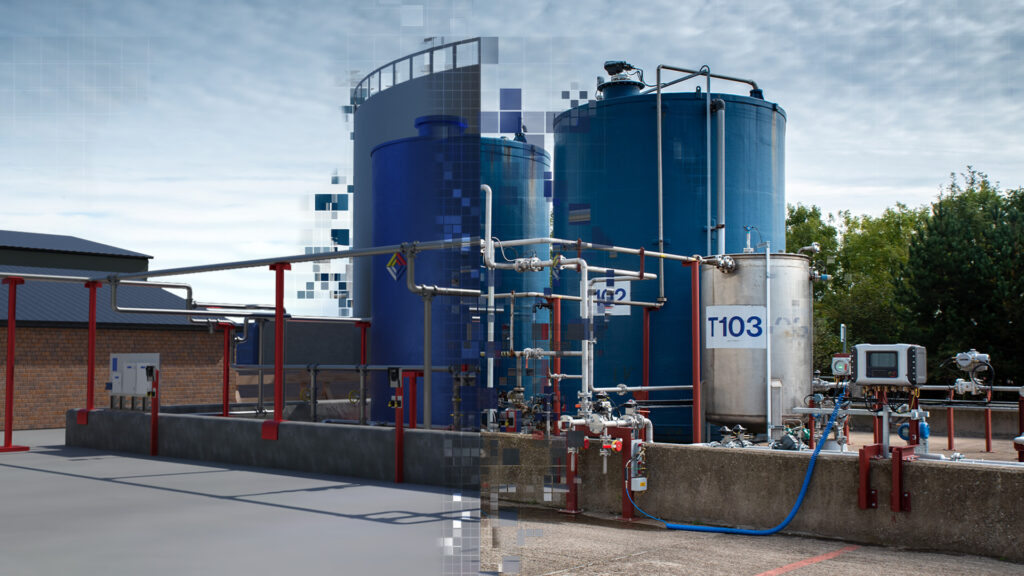
Digital tools can accelerate learning, but on their own they’re not enough. True competence isn’t built in a headset or on a dashboard, it’s built across a career. It has to be structured, measured and reinforced, so knowledge turns into capability, and capability is forged through consistent behaviours.
That’s why we work beyond technology, partnering with TSA, SIAS and awarding bodies to shape career pathways and proficiency matrices that reflect real operational needs. These frameworks link roles to responsibilities and training requirements. They make competence measurable, transferable and sustainable.
Blended learning is at the core: moving from theory, to simulation, to plant, to observed behaviours. It ensures that digital tools are integrated into the journey. Not as an endpoint, but as a step towards real-world capability.
No single organisation can solve this alone. Competence is a collective responsibility. That’s why we’re working together to shape a culture of competence that is future-proof and regulatory-compliant.
If technology is the enabler, people are the foundation. That’s the message I want to leave you with.
We cannot let competence become disconnected in a digital world. We cannot afford to lose the instincts and behaviours that underpin safety. And we cannot leave the next generation without the tools – and the confidence – to succeed.
Technology will continue to evolve. So must competence. By capturing knowledge before it’s lost, embedding it into blended training and shaping it collectively across the sector, we can face the challenges of digitalisation, energy transition and workforce change head-on.
Because in the end, competence isn’t just a compliance exercise. It’s the culture that keeps people safe, keeps businesses resilient and keeps the future within our control.
We can’t shape it alone. It takes all of us… together.

John Reynolds is the Managing Director of Reynolds Training Services Ltd. He founded the company in 2009 with a vision to create a more interconnected approach to health, safety and technical training within the bulk storage sector. Since then, he has become a leading voice in high-hazard industry training, pioneering new models of blended learning and driving innovation in virtual education.
John continues to shape national training standards while championing competence as the foundation of safety, operational excellence and industry resilience.
Written by Reynolds Training
February 16th, 2026
Competency

Let’s get
learning together!
Lines open Monday to Friday, 9am to 5pm, GMT

Prefer to talk by email?

Send a message to
enquiries@reynoldstraining.com
or fill in the form and a member of our safety team is standing by to help.
- John Reynolds