Latest Article
February 19th, 2026
Safety in Numbers: How a Sector-Wide Partnership is Rewriting the Rulebook
Other posts by this author
August 21st, 2023
Reynolds Returns to the TSA Conference & Exhibition
June 28th, 2023
TSA Publishes 2023 Annual Review
June 13th, 2023
Reynolds Training: Renewed Approval by IChemE
Categories
Competency Health and Safety Articles Health and Safety News Health and Safety Training In-House News Industry News Online Health and safety Process Training Reynolds Training Services rts Training Course Trending Uncategorized
Written by John Reynolds
July 25th, 2025
Competency
The high-hazard industries are in flux. The move from traditional fuels to alternative energy sources is upon us. It’s fast-moving. Ever-changing. That’s why competence isn’t a simple box to tick. Competence is the bedrock of safety, efficiency and trust. From oil terminals and chemical plants to offshore platforms and refineries, the risks are too great to leave training and skills to chance.
Don’t just take it from me. History has shown that when competence falters, the consequences can be catastrophic. Just take a look at studies that reveal 80–90% of all accidents are linked to human error, with 7% of major safety incidents directly rooted in inadequate training.
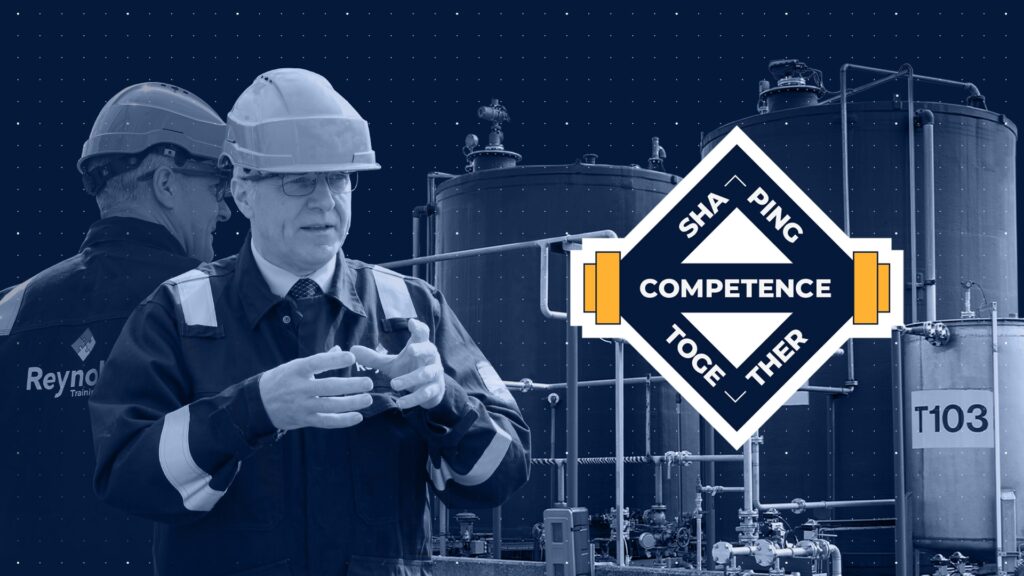
That’s why we at Reynolds Training Services, along with our partners and wider industry, are Shaping Competence Together. Across safety, delivery, qualifications, careers and beyond, we’re building something bigger: a culture of capability that can keep pace with the accelerating tides of digitalisation, energy transition and workforce transformation.
Because competence isn’t static. It evolves. It adapts. And it’s forged through collaboration.
This is the shape of things to come.
History is bookmarked by major incidents. Each is a stark reminder of what can go wrong when competence and safety culture break down. Take the 1984 Bhopal disaster. It’s the worst industrial accident on record, killing approximately 2,000 people outright (with thousands more injured or sickened). Investigations later pointed to poor maintenance procedures and inadequate training/competence levels among staff as contributing factors.
Similarly, the 2005 Buncefield oil depot explosion in the UK – which caused over £1 billion in damages – was traced to basic safety-management failings and a culture that had undervalued competent process safety oversight. The official Buncefield report highlighted the need for stronger safety leadership and board-level competence in managing major hazards.
High-hazard sectors are, thankfully, becoming safer over time. This is a credit to the hard work of industry, training providers, manufacturers and regulators alike. But we cannot afford to let complacency creep in.
John Reynolds
So, when we talk about Shaping Competence Together, we’re talking about learning these lessons, together, to avoid repeating them. Because even the smallest lapses can lead to the biggest consequences.
From the rise of automation to the race toward net zero and the urgent need to replace retiring expertise, these pressures aren’t theoretical. They’re very real. And they’re reshaping the very fabric of our sector.
Because competence doesn’t stand still, neither should we. As such, we face a clear question:
Are we shaping competence fast enough to match the pace of change?
Let’s take a look…
Technology is transforming how we train, learn and operate. But, are we shaping human competence fast enough to keep pace?
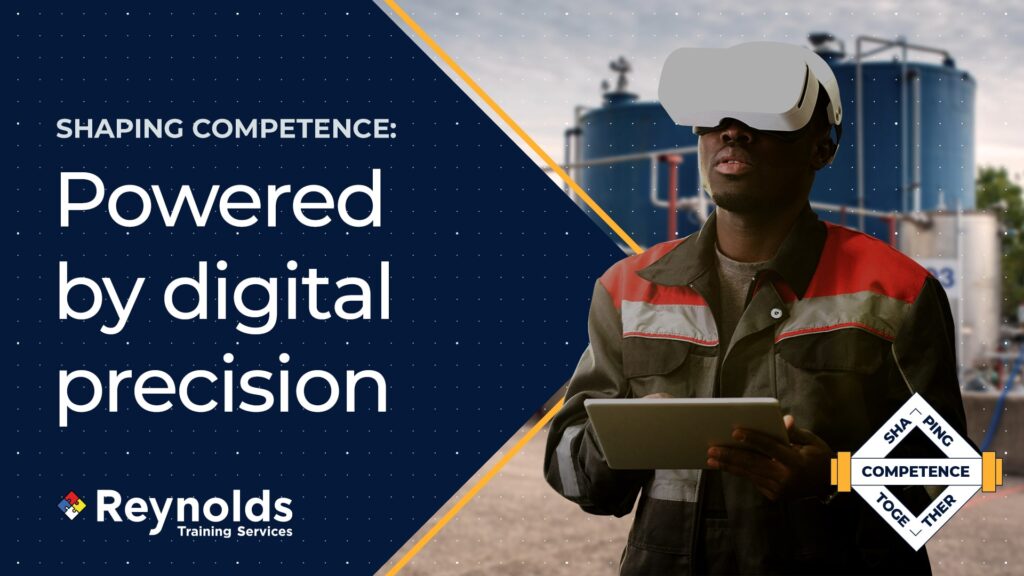
Digitalisation is sweeping through high-hazard industries. Advanced control systems, predictive analytics and VR simulators promise sharper safety and efficiency – but only when people are trained to harness them.
As the “irony of automation” reminds us, the more we automate, the more we must invest in human capability. In 2020, 26% of businesses were already using VR/AR for training and the oil-and-gas VR market alone is forecast to top $4.5 bn by 2032. That potential won’t be realised without upskilling at every level, from control-room operators decoding complex HMIs to maintenance teams wielding digital inspection tools.
The fuels may be changing, but the need for competence is more critical than ever. As we move to net zero, we must shape skills for a new energy landscape.

The shift to low-carbon energy is reshaping risk profiles overnight. Hydrogen, biofuels, Carbon Capture, Utilisation & Storage (CCUS) and battery systems bring fresh hazards and fresh skill gaps. Under COMAH, employers must prove personnel are competent not only in safety-critical tasks, but in wider operational and maintenance activities relevant to their role.
UK bulk-storage terminals already report year-on-year growth in low-carbon fuel inventories. Meeting net-zero ambitions safely therefore hinges on rapid curriculum updates, hands-on experience with unfamiliar materials and qualifications designed around tomorrow’s processes – not yesterday’s.
As experience retires and expectations shift, we must shape the workforce of tomorrow before the expertise of today disappears.
Nearly 50% of the power-sector workforce is set to retire within ten years and 43% of energy workers globally are considering leaving the industry. Couple that with poor succession planning and an insufficient training pipeline and the knowledge drain becomes a safety drain.
Bridging this gap demands structured mentoring, faster onboarding and career pathways that attract – and keep – new talent. If we capture veteran know-how while empowering the next generation, we don’t just maintain standards, we raise them.
“Competence must evolve as quickly as the technology and energy systems we run. That evolution can’t wait for the next incident to remind us why it matters.”
– John Reynolds
Addressing these challenges means re-thinking how we define and cultivate competence at every level of an organisation. It’s not enough to meet the minimum regulatory requirements or to have training “on the books”.
We need to foster what I call a culture of competence: an environment in which continuous learning is valued, expected and integrated into daily work. An environment where everyone, from boardroom to control room – and beyond – understands their role in maintaining safety.
Regulatory standards give us a fantastic starting point. In the UK, for example, HSE’s inspectors expect companies to have robust competence management systems that clearly link training and assessment to specific safety-critical tasks in their Major Accident Prevention strategies.
But the bar set by regulation is the floor, not the ceiling.
It’s still common to assume someone is competent just because they’ve taken a course or have long job experience, without verifying if they can actually carry out safety-critical tasks in practice.
To close the gap, we need assessments that go beyond theory – testing real understanding and practical ability. That means not only frontline staff, but also supervisors and managers involved in safety decision-making.
Competence isn’t just a technical checklist. It’s how we hire, how we onboard, how we continually assess and improve our people and how we build a safety-first culture that’s lived at every level.
Consider Longford (Esso, Australia, 1998): even trained operators didn’t fully grasp the hazards they faced and tragically, the testing didn’t uncover it. They had the “right” answers on paper but missed the underlying concepts.
That’s why we need a culture where saying “I’m not sure” or “I need more practice” is seen as responsibility, not weakness. If leaders reward honest reflection and treat competence-building as a priority – not an afterthought – we make real progress.
When safety becomes a shared responsibility, competence becomes an everyday habit. Operators speak up. Teams anticipate issues. Red flags get raised early.
Across industry, the Tank Storage Association (TSA) is leading by example. Its members share near misses, minor leaks and improvement data, actively spotting and fixing weak signals before major incidents happen. That’s the culture we need.
Not silence. Not box-ticking.
So what are we – industry leaders, training organisations, regulators – doing to shape a more competent future? At Reynolds Training Services, we asked ourselves this very question and realised that no single company or institution can solve the skills challenge alone.
That ethos inspired our new brand statement, Shaping Competence Together. It’s a commitment to partnership. We are actively working with industry bodies, employers and educators to redesign how our workforce is trained, qualified and developed over a career.
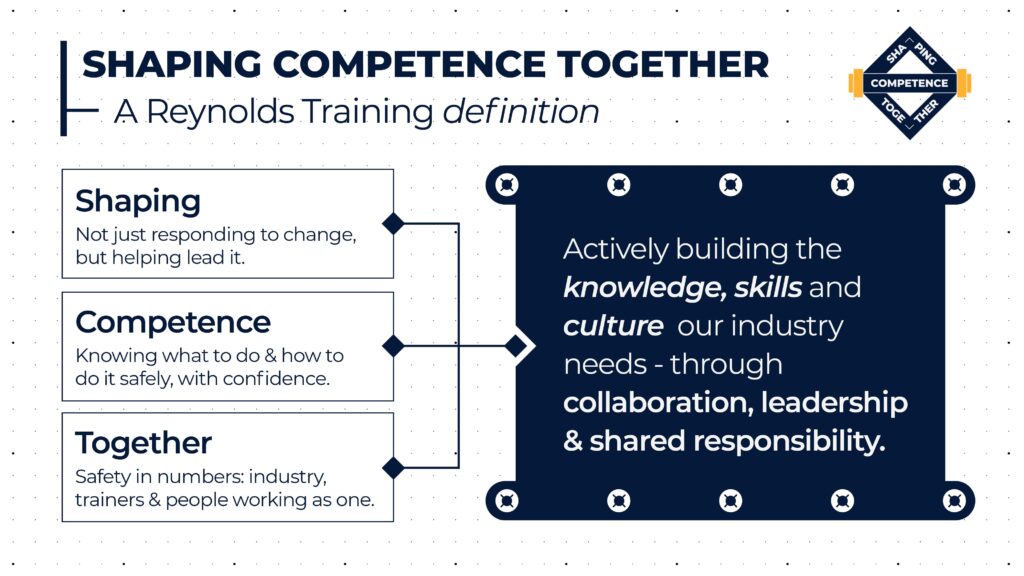
Our recent collaboration with the TSA and SIAS is a living example of Shaping Competence Together. This wasn’t about tweaking old training. It was a root-and-branch rethink. One built around real operational needs and future industry challenges.
Let’s take a look…
Includes new qualifications like:
Courses address:
A key innovation is our Proficiency Matrix, which defines not just what someone should know, but how well they should apply it:
Genuine competence is demonstrated in the field, over time and grows with guided experience.
This work was made possible through true cross-sector collaboration.
Ongoing input from the TSA Skills Committee:
Aligned with regulators and national bodies:
Anchored in key industry standards:
Participating companies share anonymised insights (e.g. near-misses, implementation challenges) to improve the system for all.
Working Together, this initiative is Shaping a collective culture of Competence, where:
When one site improves, everyone benefits.
High-hazard industries are not relics of the past. They’re vital sectors with a critical role to play in a safer, more sustainable future. But realising that potential depends on one key thing: investing in people.
Competence isn’t a one-time project. It’s a mindset. A culture. Competence must be embedded across operations and maintenance. That means leaders at every level championing development, prioritising safety even under pressure and recognising that doing a job well means doing it safely and competently.
It also means preparing for change. By 2030, the workforce will be more digital-native, more diverse and navigating an energy system in flux. We need to equip that workforce today, whether it’s a:
And we must plan for knowledge transfer. When experienced hands retire, they should leave behind playbooks, not just empty desks. Some companies have already launched “retiree comeback” schemes – part-time coaching roles for former employees – while others are partnering with colleges to modernise curricula and highlight that high-hazard sectors offer not just oil and metal, but tech, impact and green hydrogen careers.
All of this contributes to a competence ecosystem.
From where I sit – as both a training provider and industry partner – the momentum is real. We’re now talking about structured frameworks, digital delivery and succession planning. Regulators are moving towards goal-setting regimes, requiring ongoing proof of workforce capability.
Trade bodies are helping break down silos by sharing data and learnings. Most encouraging of all? Frontline teams themselves are stepping forward. The uptake we see in optional courses reflects a genuine appetite to learn and grow.
Let’s be clear: competence is not only about preventing accidents – though that remains the most urgent benefit. It’s also about driving operational excellence:
Consider the UK’s tank storage sector: handling over 75 million tonnes of hazardous product a year, it remains a high-reliability industry – in large part due to shared best practices, strong training and commitment to competence. That reliability supports not just the sector, but the thousands of downstream businesses that depend on it.
And in today’s world, competence is under scrutiny. Investors, insurers and the public all expect transparency, safety and meaningful workforce development. Companies that embrace that will attract the next generation of talent. Those who don’t risk being left behind.
In the end, safety and success are two sides of the same coin. And competence is the edge.
As we roll out our new brand statement – Shaping Competence Together – we’re inviting the sector to help define what competence truly means in a world of constant change.
Regulators. Fellow training providers. Awarding-organisations. Trade association. Workforce Managers. Operations and maintenance personnel…
We want to know what you think.
For us at Reynolds Training, this isn’t just about qualifications. It’s about vision. Culture. Action. Competence is about coming Together to Shape:
Because this isn’t the end of the pipeline. It’s the shape of things to come.
Shaping Competence Together is about safeguarding our people and our communities today, while also future-proofing our industries for tomorrow. It’s a call to action that I extend to all our partners, peers and even competitors: let’s continue to break down barriers and work together on this front.
Whether it’s sharing a safety lesson, co-developing a training standard or simply encouraging a mindset of continuous learning, every action counts. The next decade will bring new technologies, new energy systems and new risks – but also new opportunities for those prepared to handle them.
By uniting around a culture of competence, we ensure that high-hazard industries not only remain safe and compliant, but truly thrive as high-performance, high-reliability industries. That is the vision we at Reynolds Training Services, and I personally, am passionate about.
That’s because when we Shape Competence Together, we shape a safer, stronger future – for everyone.

John Reynolds is the Managing Director of Reynolds Training Services Ltd. He founded the company in 2009 with a vision to create a more interconnected approach to health, safety and technical training within the bulk storage sector. Since then, he has become a leading voice in high-hazard industry training, pioneering new models of blended learning and driving innovation in virtual education.
John continues to shape national training standards while championing competence as the foundation of safety, operational excellence and industry resilience.
This article draws on a wide body of industry insight, regulatory guidance and real-world learning. Thanks to the following organisations and frameworks for helping shape the conversation around competence, safety and workforce development:
Written by John Reynolds
July 25th, 2025
Competency

Let’s get
learning together!
Lines open Monday to Friday, 9am to 5pm, GMT

Prefer to talk by email?

Send a message to
enquiries@reynoldstraining.com
or fill in the form and a member of our safety team is standing by to help.
- John Reynolds